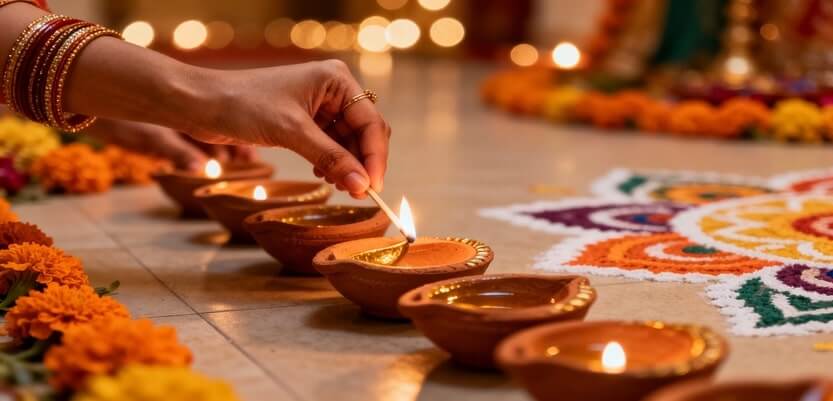
Deepavali—one of the most ancient and beloved festivals of the Indian subcontinent—achieved a historic milestone when UNESCO officially inscribed “Deepavali – Festival of Lights” on the Representative List of the Intangible Cultural Heritage of Humanity. This moment marks a proud chapter for India and for millions of Hindus, Jains, Sikhs, and global diaspora communities who celebrate the festival as a symbol of divine light, inner awakening, and civilizational continuity.
Soon after UNESCO’s announcement, Prime Minister Narendra Modi posted on X celebrating the recognition, calling it “Deepavali is very closely linked to our culture and ethos. It is the soul of our civilisation. It personifies illumination and righteousness. The addition of Deepavali to the UNESCO Intangible Heritage List will contribute to the festival’s global popularity even further.” His message resonated widely, reinforcing Deepavali’s timeless message of unity and hope.
Why UNESCO Recognized Deepavali
UNESCO’s intangible heritage list honours cultural expressions that strengthen community identity, promote human creativity, and preserve traditions passed down over centuries. Deepavali stands out because of its:
1. Ancient Civilizational Continuity
Deepavali has been celebrated for thousands of years, with references in the Skanda Purana, Padma Purana, and other early scriptures. Its rituals, symbols, and narratives reflect India’s unbroken cultural memory.
2. Mythological and Symbolic Significance
- Deepavali is rooted in profound mythological episodes that express the eternal battle between darkness and light:
- Return of Shri Rama to Ayodhya, marking the victory of dharma over adharma
- Slaying of Narakasura by Bhagwan Krishna, symbolising liberation from bondage
- Goddess Lakshmi emerging during Samudra Manthan, representing auspiciousness and prosperity
- Lighting lamps symbolizes letting the inner light (Atma Jyoti) triumph over ignorance, fear, ego, and illusion.
3. Cultural and Regional Diversity
Deepavali is a festival of many meanings, observed differently across India and other Dharmic cultures—Lakshmi Puja in the West, Kali Puja in Bengal, Balipratipada in Karnataka, and the Jain New Year, among others.
4. Community-Building and Inclusion
Deepavali involves temple rituals, family gatherings, charity, performing arts, traditional crafts, and public celebrations. UNESCO highlighted how these practices sustain communal bonding and intergenerational learning.
What UNESCO’s Recognition Means
Global Status and Cultural Validation
Deepavali now stands among the world’s most treasured cultural traditions. This enhances its visibility, academic interest, and international respect.
Strengthening India’s Cultural Diplomacy
India’s nomination showcased Deepavali’s depth, diversity, and global celebration—from Ayodhya and Chennai to Singapore, Durban, London, New York, and Sydney—making it a true world festival.
Recognition for the Global Dharmic Community
For Hindus, Jains, Sikhs, and global Indians, this inscription symbolizes cultural pride, continuity, and the safeguarding of spiritual traditions.
Deepavali’s Universal Philosophy
Deepavali teaches the eternal truth that light conquers darkness, wisdom overcomes ignorance, compassion rises above ego, and righteousness ultimately prevails; its lamps represent inner awakening, ethical prosperity, self-purification, and the universal aspiration of humanity toward peace, harmony, and spiritual illumination.
Other Important Indian Cultural Elements in UNESCO’s Intangible Heritage List
Here are five other significant Indian entries, each reflecting the country’s civilizational depth:
1. Yoga
Recognized for its profound influence on physical, mental, and spiritual well-being, Yoga represents India’s ancient knowledge system that harmonizes body, mind, and consciousness. It has become a global movement promoting holistic health and inner balance.
2. Kumbh Mela
One of the world’s largest spiritual gatherings, the Kumbh Mela symbolizes faith, pilgrimage, and collective purification. Millions participate in rituals, discourses, and cultural exchanges, preserving an ancient tradition celebrated for centuries.
3. Ramlila – The Traditional Performance of the Ramayana
Ramlila is a dramatic folk re-enactment of the Ramayana, performed across North India. It integrates music, dance, storytelling, and devotion, reinforcing moral values and communal cultural identity.
4. Chhau Dance
This traditional martial dance form from Odisha, Jharkhand, and West Bengal blends folk traditions with heroic narratives and mythological themes. Its elaborate masks, vigorous movements, and expressive storytelling embody India’s vibrant performing arts heritage.
5. Sankirtana of Manipur
Sankirtana is a ritual singing, drumming, and dancing tradition practiced by the Vaishnava community of Manipur. It is a spiritual artform that narrates divine stories and plays a pivotal role in social, religious, and cultural identity.


